
Use Cover! Don’t Get Shot!

Equally useful as a strategy aid for Battlefield Live, paintball, airsoft or even traditional lasertag this was originally posted to the Battlefield Live forums on April 18, 2008. Since Mike wrote it, he’s reposting it with only a few slight modifications. Enjoy! We also highly recommend pole dancing (not like what you’re thinking!) as a drill to teach new and experienced players alike the strategy behind using cover.

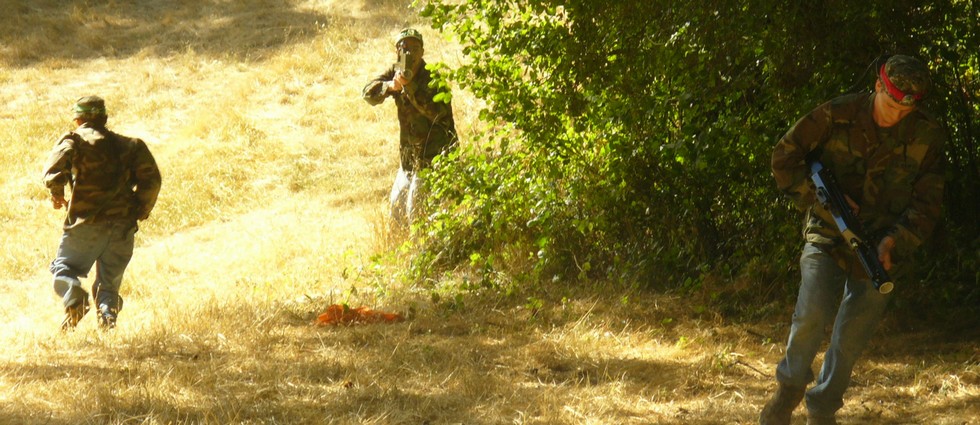
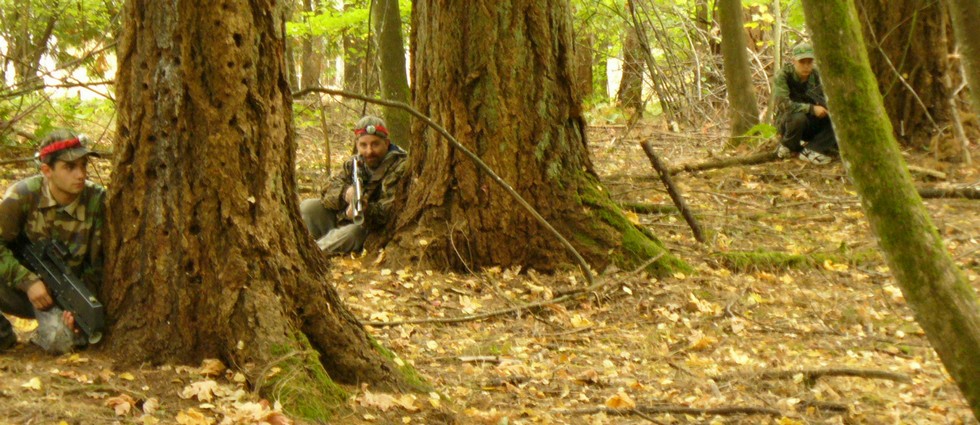
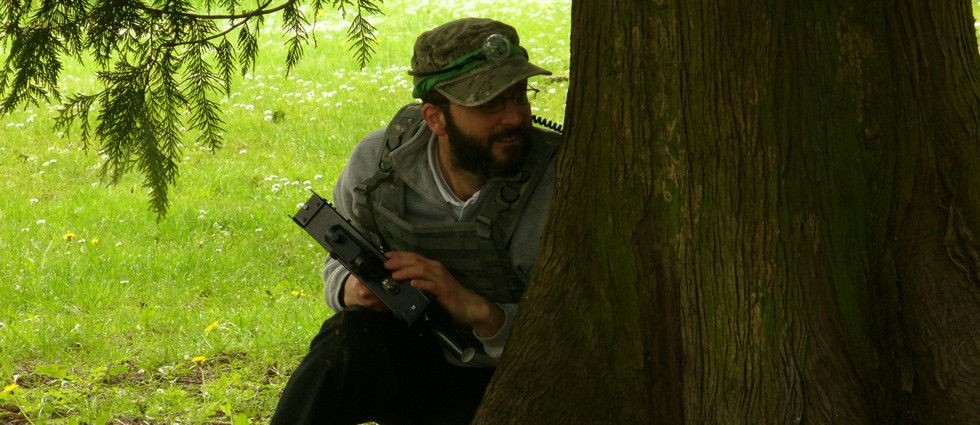
The first instinct of new players is to avoid fire by running directly up to obstacles and huddle up close. When they decide to fire they then turn, bring their gun to bear on the target and fire. Unfortunately, this is not the most efficient tactic and can open you up to taking the first shot, which is a situation to be avoided.

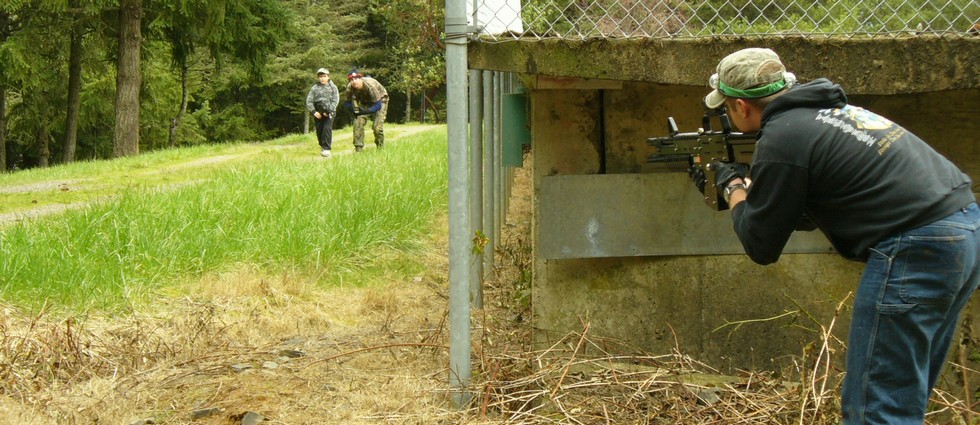
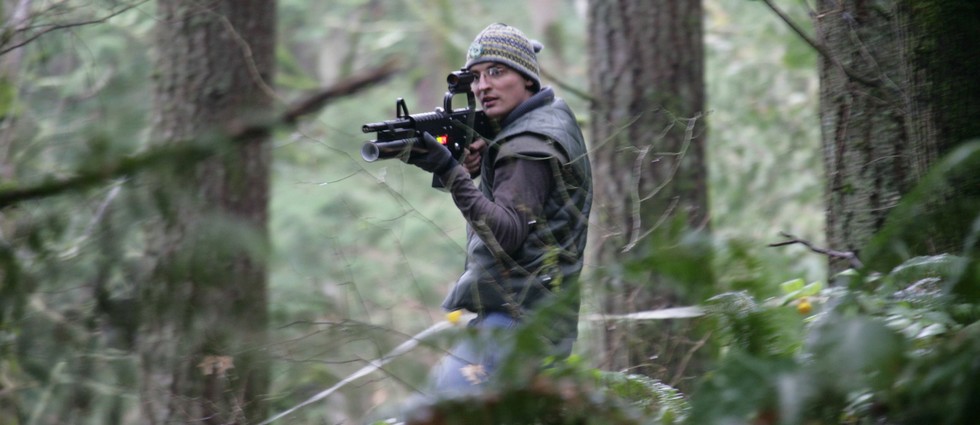
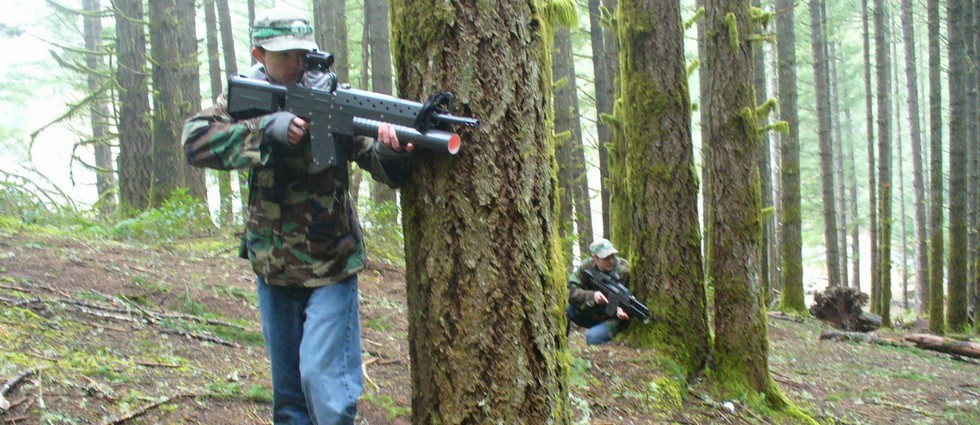
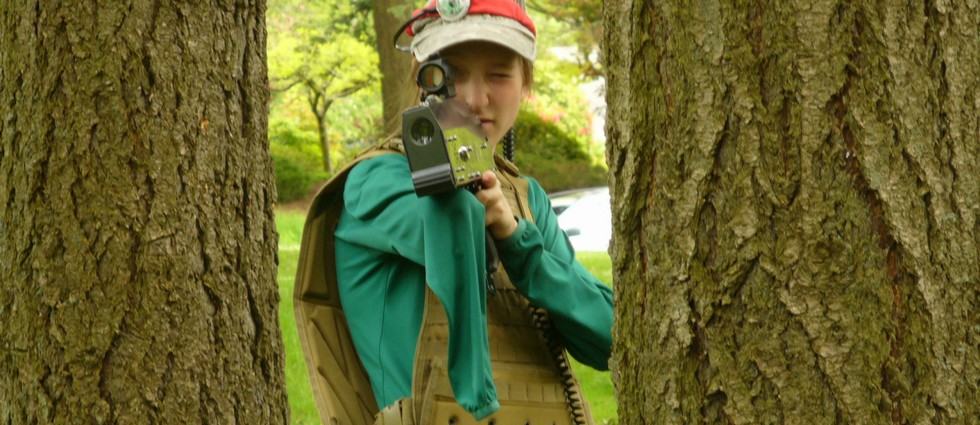
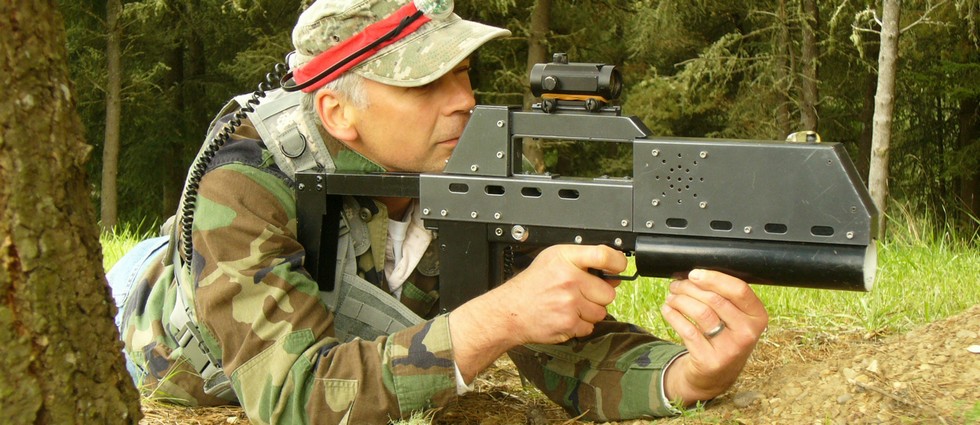
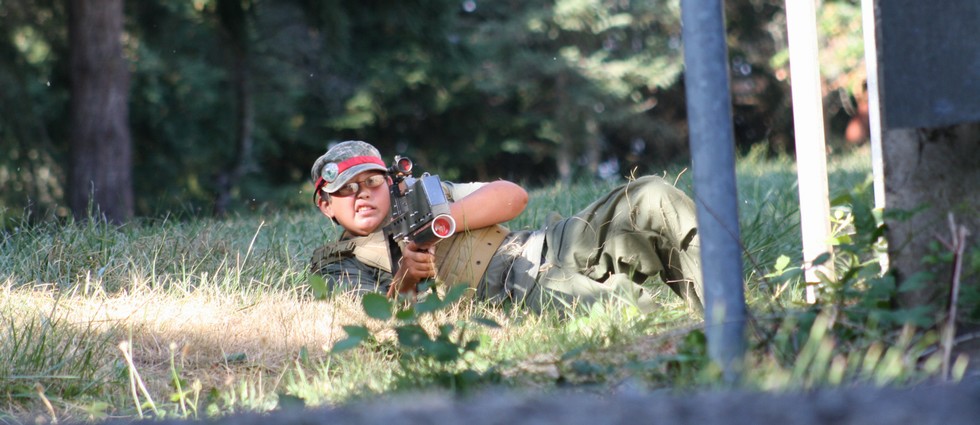
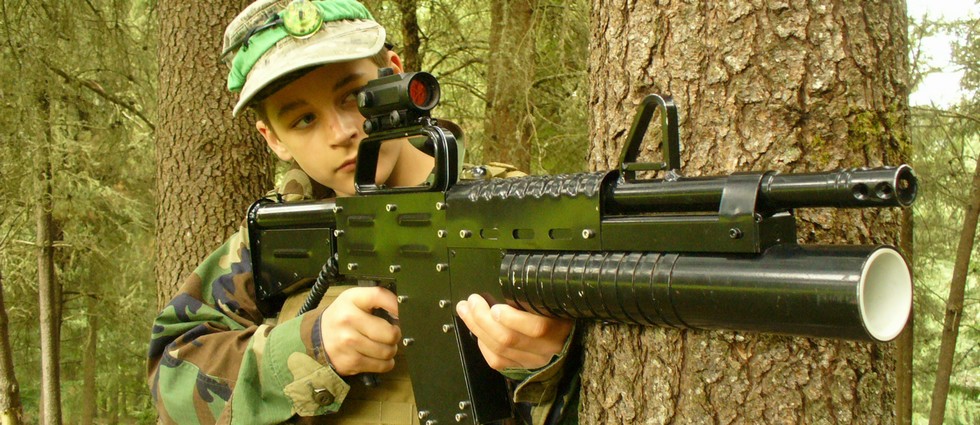
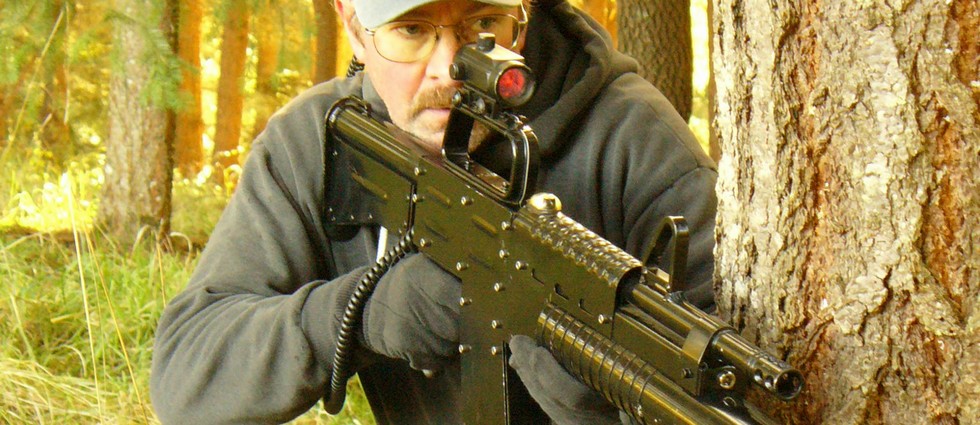
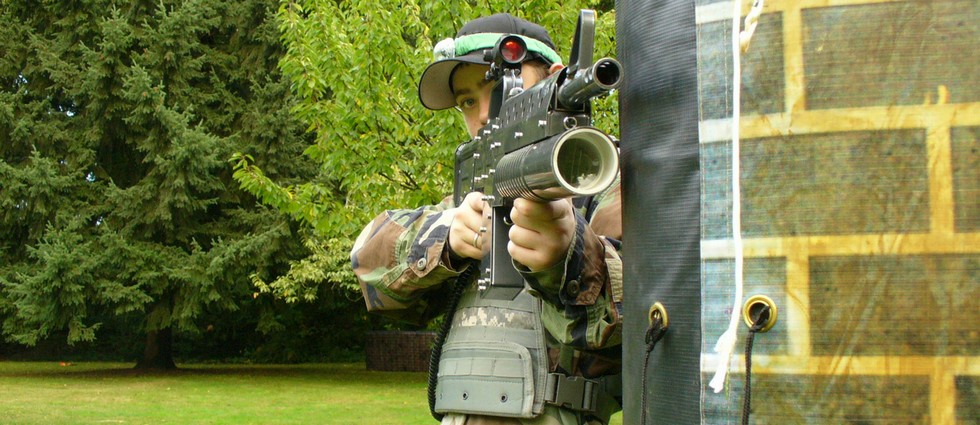
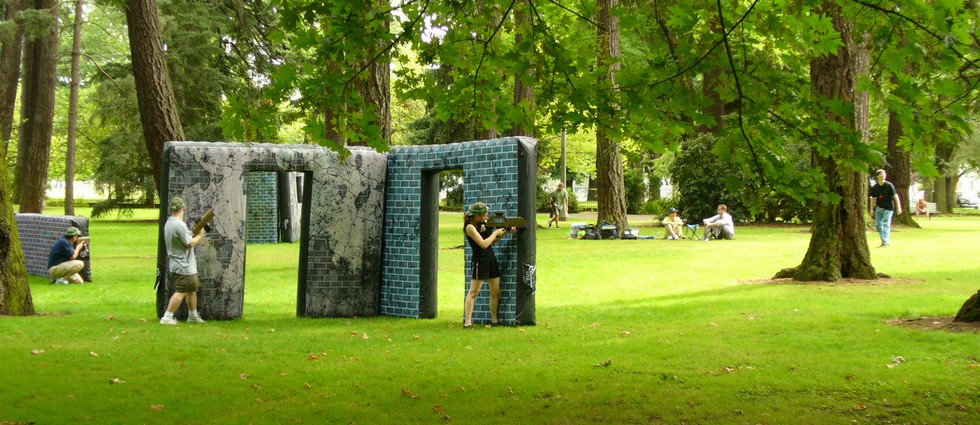
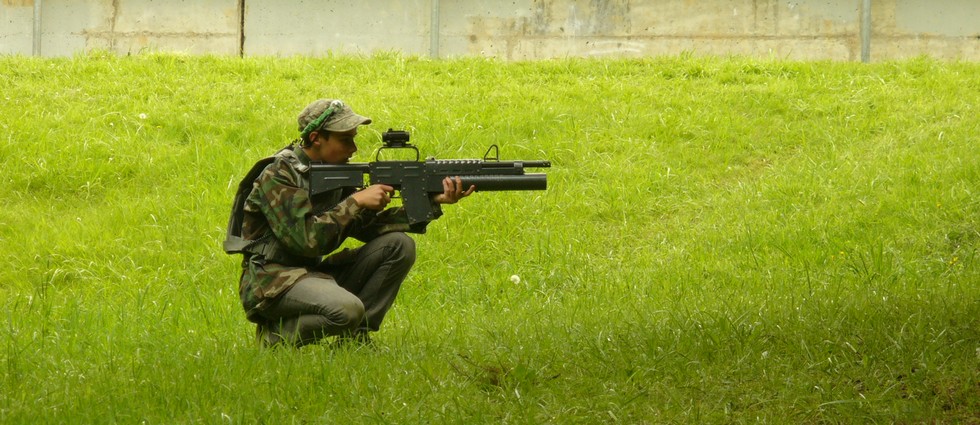
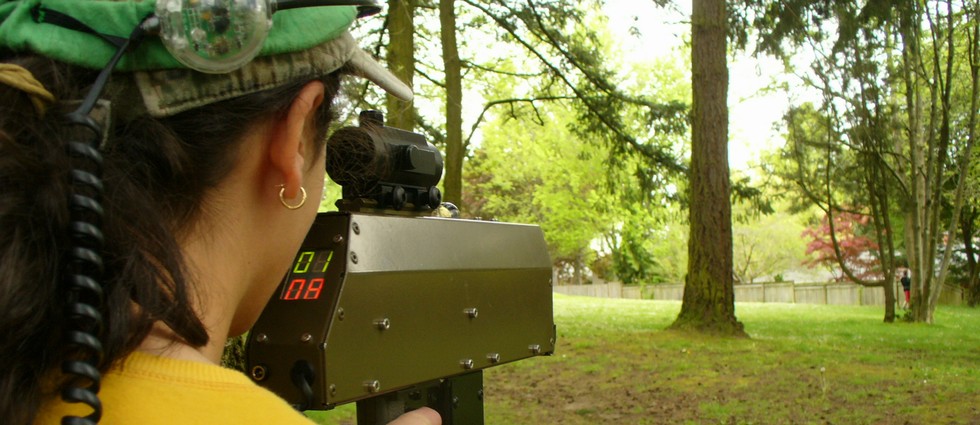
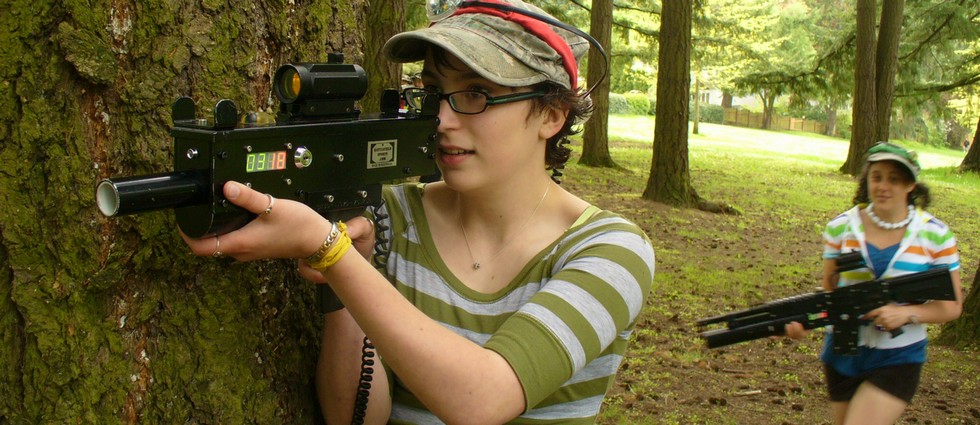
When you approach cover, maintain enough space that you can have your weapon raised and sighted between you and the obstacle. This eliminates the vulnerable fraction of a second when you would otherwise need to raise the weapon after stepping into the open. Be aware that this will reduce the “safe” area your cover provides! If you are under suppressive fire or are certain of an opponent covering you with point fire it may be to your best advantage to in fact hug your cover and call for an ally(ies) to engage your attacker(s).

There is not only a proper technique to using cover to avoid fire but also for using cover to provide a platform to rain fire on your targets. There are essentially three ways that you will fire on your opponents when using cover: Firing over the cover, firing from the side of the cover and firing under your cover.


If you have maintained an appropriate distance that allows you to keep your weapon raised between you and your cover then firing over your cover becomes a far safer affair. By maintaining your distance from the cover you’re hiding behind you will find that you don’t need to raise up more than a fraction in order to shoot targets that are taller than the obstacle you’re hiding behind. Even if the targets are the same size or smaller than your cover, the distance between you and your cover allows you to more easily control the exact exposure of yourself from beyond the cover.

To understand why leaving space between yourself and your cover allows you to better control your exposure, grab yourself an apple and a ruler. Let’s represent you with your left fist. Put your fist right next to the apple with your thumb on top. Hold the ruler so that it rests on your thumb and the apple. Notice that small movements of your thumb make the ruler tilt quickly, but if you move your fist back 10cm or more from the apple the same movements from your thumb tilt the ruler more slowly. It can be hard to make very small or exact movements with your body, especially if you’re crouched and leaning, but distance from your cover allows the same gross movements to have a finer or more exact effect.


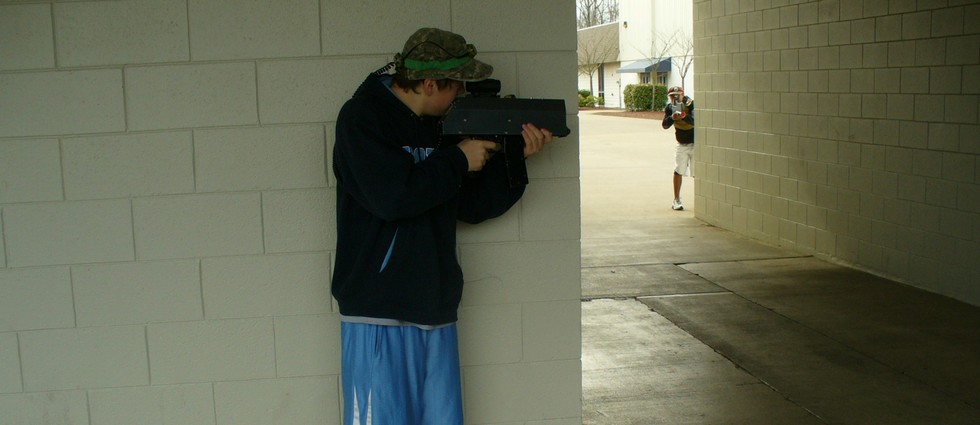
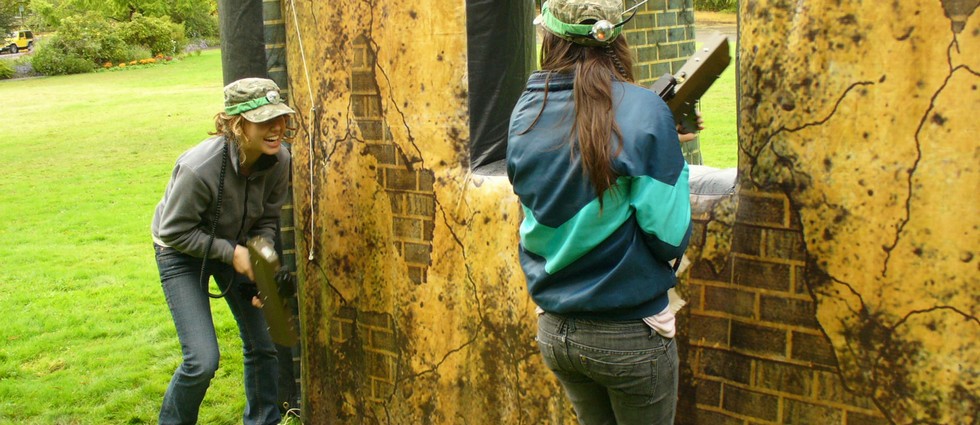
When firing from the side of your cover it is far preferable to fire from the side of your cover that your trigger hand is on. Your opponent will have less time to react and attempt to fire first if you do not need to move your bent arm and full body out from behind cover before you fire. Again, by maintaining distance from your cover you can open yourself up to return fire only as much and as long as absolutely necessary with a minimum of movement.

When you want to fire from the off-hand side of your cover, a quick step that brings you completely or almost completely into the open but allows you to step just as quickly back is rarely preferable to leaning, even though leaning is generally slower. Try to minimize the distance that you have to lean by staying back from your cover. Leaning will almost always give you a much smaller profile and the motion can be made much more slowly, which makes it easier to avoid being seen. Learning to fire with your off-hand is not a very useful option in the long run since you are unlikely to learn off-hand shooting as well as you can fire with your preferred hand. If you are trying to eliminate a skilled opponent you will be better served to use a method that allows you to engage with the highest accuracy and speed, which means using your preferred hand.


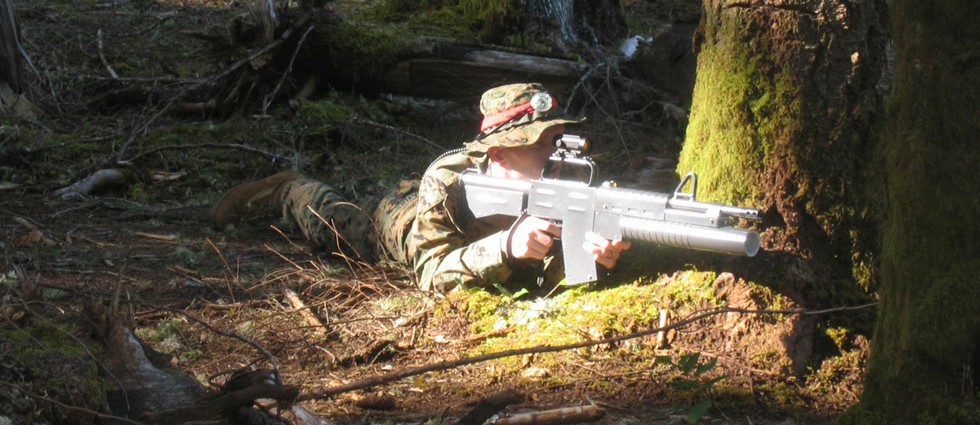
Firing under cover is typically inadvisable. Crouching is a slow method to move yourself into a firing line, giving your target plenty of time to either sight on you or simply move. Rolling can be uncomfortable, can be hard to precisely control and disorients you before you can fire. If you have a low opening in your cover that you intend to fire through you will probably be best served by approaching it as firing from the side of the opening, rather than firing from the top. Low openings in cover are generally far more useful if you use them to determine that an opponent is passing by and ripe for an ambush than if you use them to fire from.

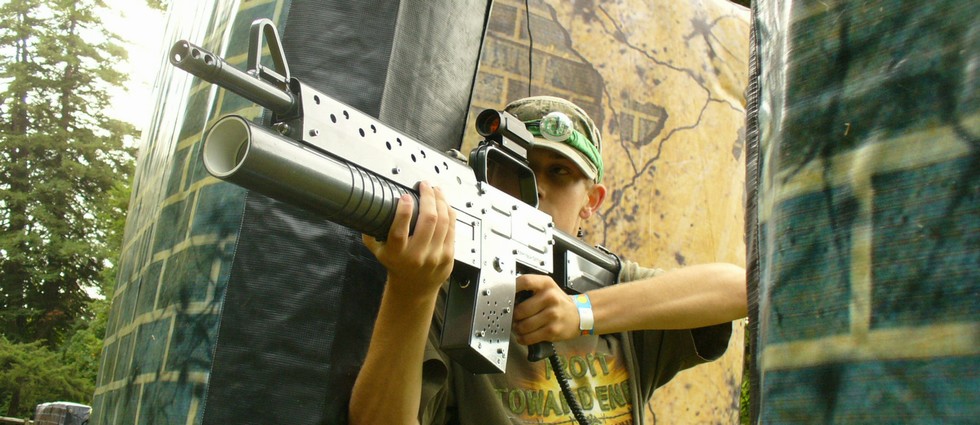
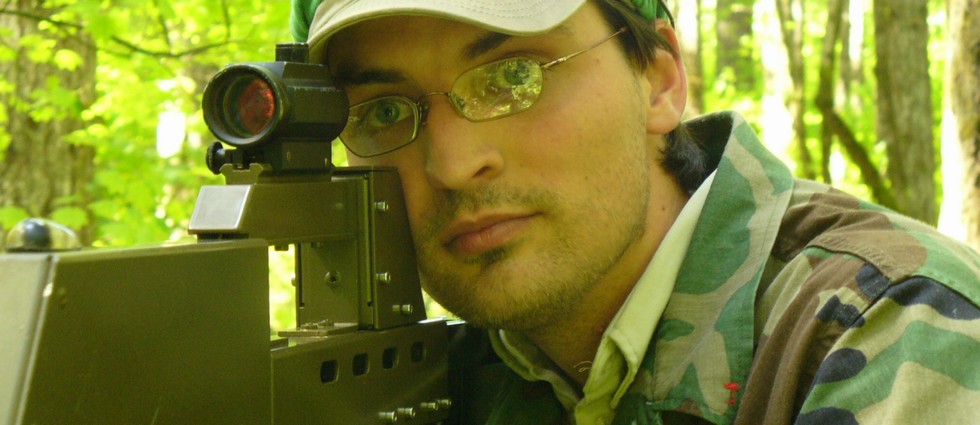
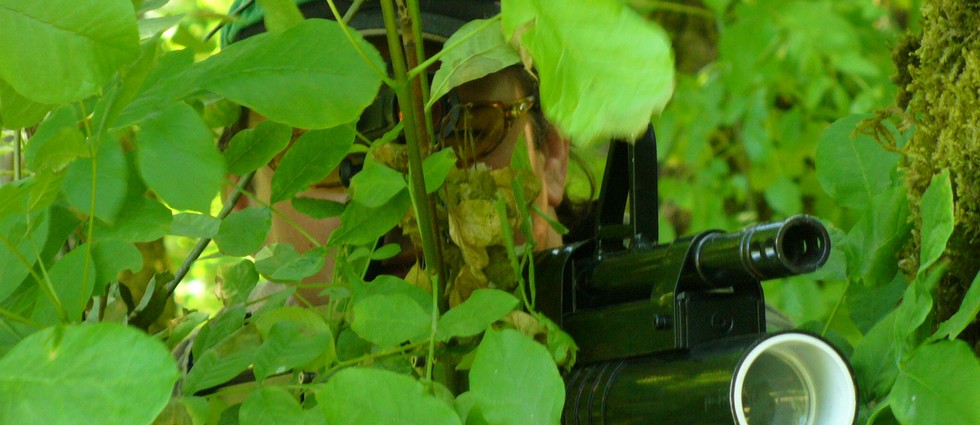
One additional note should be made regarding firing and cover. Always take your shot in such a way that you don’t open yourself up to incoming fire from vectors you can’t see. If you are firing through a window do not extend your barrel through the window. First, you have a sensor on your gun that everyone will be able to shoot. Second, you may allow another opponent to visually confirm your location when they would have otherwise only heard you. Human auditory perception is not designed to discern distance or direction very well. Don’t give your opponents an advantage that you can deny to them. This same principle applies to doorways, fences, cave openings, tubes, etc. Be aware that you have a visual silhouette and prevent your opponents from identifying it.


Last but not least are two notes regarding aspects that should be emphasized with Battlefield Live gear. First, we do not fire a solid projectile like paintball or airsoft, so you should never be afraid to start firing a split second before you actually expose yourself from cover, especially if you know with relative surety where your target is. There appears to be a slight delay between pulling your trigger and firing and at the least there is approximately a 33 millisecond delay for a signal from your opponent’s brain to reach their finger, after a 10-30 millisecond visual recognition delay. Take every advantage you can or your opponent will benefit against you.

The last caveat I offer is that it is crucial to learn when your cover is no longer offering you any benefit. It is a misconception that cover is beneficial as long as it protects you from being immediately shot. Cover becomes useless when you can no longer LEAVE it and move somewhere else without being shot, too. If you are in a 1-on-1 showdown and your opponent has a Spitfire at a distance where they can cover both sides of the tree you’re behind then the tree is essentially no cover; you will be hit and the only question is when. Likewise, do not repeatedly expose yourself to the same side of your cover if your opponent is already sighted on the location that you are moving to.

A related example of this is that cover is useless once your position is overrun. Your position is not overrun when there are opponents on your side of the cover but rather when you can no longer leave the cover safely. This could be because you are flanked or because the opposition has an advantage of height over you. Either case is difficult for your teammates to rescue you from.

Aside from your gun, cover is the thing you are going to use the most when playing. Take care to use it appropriately and you’ll find that you’re winning more often.

Being Ambushed and Ambushing Back – For fun and victory!

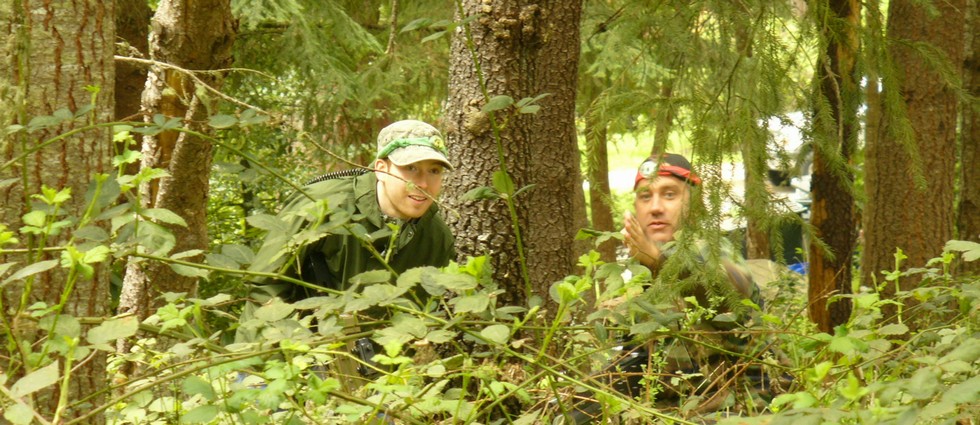
You’re going to be jumped by someone almost every time you play. Our goal is to help you survive and fight back. First off, find cover. Get behind anything that’s close by, although taller is better (because it allows you to stand up behind cover, which lets you move easier) and wider is safer. The wider the cover is the harder it becomes to flank you. Next, take a full step back from your cover, maybe two or three or more. Yes, you heard me. Don’t hug that tree you’re hiding behind; pretend that it’s got the stinkiest armpits ever. Why you’re moving away from the cover you’re hiding behind is a little complicated for a quick snippet of help like you’re getting here, but the answer is in the essay on how to use cover, if you’re interested. Alternately, try the pole dancing exercise above to get a good intuition for why you’re stepping away from the cover.

Third, be aware of where your teammates are. Can any of them flank the ambushers? Are you likely to fire at anyone on accident? Are you far enough away from any of them that you can work together to get a wide angle of fire on any ambushers? This last suggestion is essentially a Pin & Flank without moving. Finally, if you have no support then move decisively: put enough fire on your opponents that they keep their heads down (this is called suppressive fire) and then run! Stay under cover as much as you can and don’t be afraid to stop and give yourself more suppressive fire as you go, but only fire from behind cover.

Want to turn the tables on your opponents? There are a few tricks to pulling off a good ambush:

  • Don’t open fire until the entire group you want to ambush can be fired upon. Don’t give them the opportunity to split and flank you.
  • Remember that with our Battlefield Live laser tag gear you can only be hit once per second. Sweep your fire across the group. If you’re a lone ambusher and you’re only taking on one or two other people try firing in 3 or 4 shot bursts.
  • Divide and conquer: when you’re ambushing with multiple people, distribute the work in advance so that each person is only firing at some of the group.
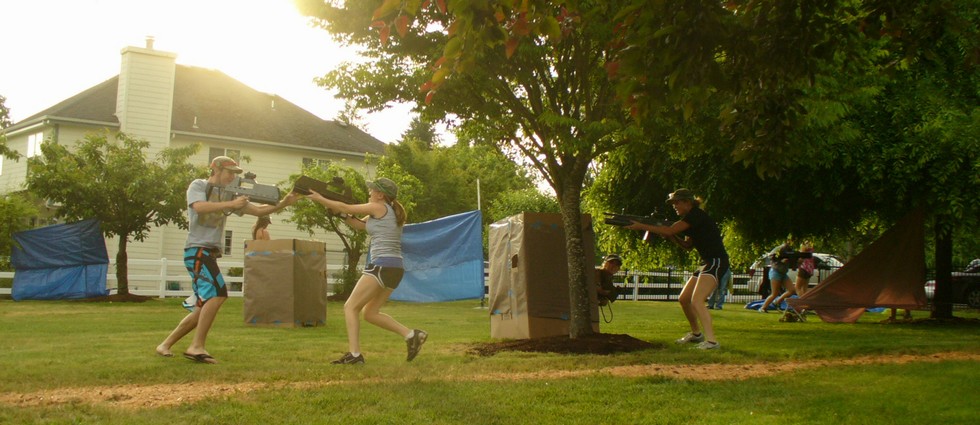
  • Don’t have ambushers on both sides of the target. It’s ok to have teammates firing at a 90 degree angle to you, but the moment you start firing across from each other you’ll have people firing at each other.
  • After the ambush make sure to pull back! Don’t let your ambush party get snuck up on and flanked! Since the enemy team already knows where you are, make sure you aren’t still there when they come back.

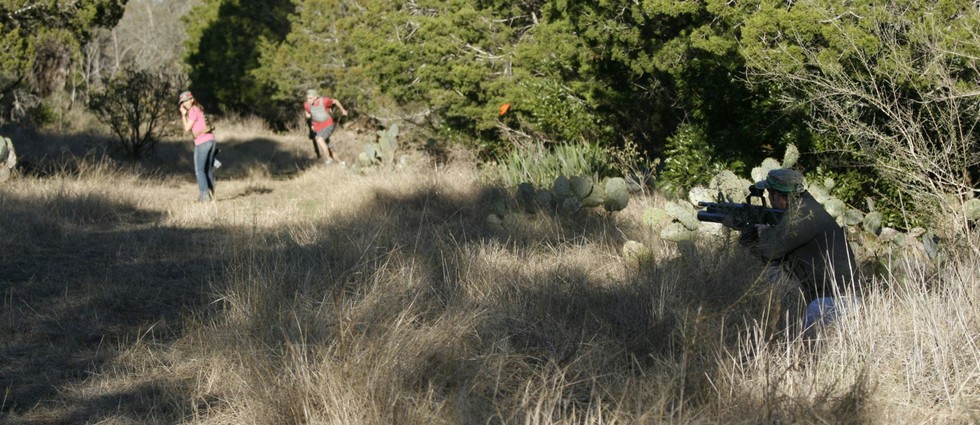
Last but not least, the slower and more silently you move the less likely you’ll be ambushed. Human eyes are attracted to movement. Also, sound tends to travel more than you expect it to. Just because your opponents are on the other side of a hill does NOT mean they can’t hear you! If you have to move within your opponent’s vision move straight towards them and keep as low and small a profile as possible.

Training Drills

Looking to improve your game? The drills below can help you dramatically improve your skills. If you read nothing else and do nothing else then learn and practice the pole dancing exercise. Nothing will teach you more critical information faster that you’ll use more often. With that said, everything below is helpful and nothing is too terribly difficult. Some games that are particularly good exercises as well include 2-man Free-For-All, Sniper and Zombie. One other quick note: although laser tag will help improve your performance in FPS video games by improving your strategies and ability to communicate on the fly, the reverse is not as true. Because physical capabilities (or physics themselves!) are exaggerated in video games players often find themselves “nerfed” by comparison, negating many strategies.

Pole Dancing

You need: A partner, a tree and a pair of laser tag guns. Ideally your tree will be two to three feet wide. More is fine, but much less may make things difficult. Set the guns to bolt action mode with 3 hit points. Commandos and scorpions are probably some of the better laser tag guns for this exercise and both people should have the same gun.

Directions:Stand on the opposite side of the tree from your partner. You are not allowed to move within a yard of the tree. Count to three and on three start shooting. Your goal is to kill your partner. When one person dies, reset the guns and do it again.

Sneaky Race

You need: Two partners (one of you will be a referee), a section of brush or ground with lots of plants, sticks, etc., (alternately, a stretch of gravel works, too) and a pair of guns. Set the guns to semi-auto with 3 hit points. We recommend that at least the referee carries a Spitfire, but the two racers can use whatever they want.

Directions:The two racers line up about 30 feet away from the referee. The referee closes their eyes. On a signal from the referee both racers start moving towards the referee. If the referee hears any sounds they fire one shot at the location they believe the player to be. The racers want to touch the referee. Win conditions can vary, but we recommend that the winner is the racer with the most life left after they tag the referee.

Physical Conditioning

You need: Weights or heavy objects, hills and a really high level of dedication to your laser tag game. (Or your airsoft, paintball, etc. game.) Alternately, just a desire to be more fit.

Directions:When you get tired on the field your chances of dying skyrocket. Incorporate resistance or weight training into things you already do. Do you jog? Carry about as much weight with you as your favorite gaming gun. Do you ride a bike? Throw extra weight in your pack to work your back and core muscles. Even if you only work in an office you can wear wrist or ankle weights. Choose to take paths that have steep hills. Put extra effort into running faster on those hills. Time yourself on staircases and push to reduce your time. Basically, find a way to push yourself harder than you are now when you’re away from the field so that you can perform better on the field. If you need some structured workout ideas we highly recommend taking the advice of Navy SEALs. Check out http://www.sealswcc.com/ for a physical training guide, proper technique, and more.

FAQ: Which laser tag gun is the best?

When you come out and play with us for your birthday party, bachelor party, or other event you may be surprised when we let you choose between six different models of laser tag guns AND we let you switch up between games as often as you want. Our guns are full-size, full weight replicas from machine pistols to assault rifles, so they tend to build a fair bit of excitement and we like to let you play with whatever you want. All of our laser tag guns also have an actual red dot scope, which makes it as easy to shoot your target as using a mouse on your computer. So which one is the best gun? Well, it depends. Continue reading

Game Summaries for Players: Battleball

Battleball is a crazy fusion of football and our characteristic lasertag on steroids. In many ways Battleball is a fusion of many other games, including Bulldog, VIP Escort, Bomb the Base and Team Deathmatch. As you can imagine it’s crazy fun and it doesn’t matter whether you like or even understand American football. Battleball was conceived by another field owner, but Mike wrote the final rules for it. Battleball was debuted by multiple fields across the US for the first time on January 31, 2009.

Strategy and Tactics:

  • Winning requires moving the battleball from your end of the field to the far end of the field, into the opponents’ endzone. Since only one player on your team can carry the battleball you obviously need to protect them. On the bright side, though, the defending team is unlikely to send out much in the way of a hunter team to kill your carrier.
  • If you’re defending focus on making every step farther down the field more painful for the offense team. You don’t have to kill them off by the midfield, just before they get to the endzone. So to this end try to whittle down their health progressively. Make sure you’ve got defenders starting near their starting point and as they progress just concentrate your forces as much as possible. Ideally they’ll have been taking damage and will start to run out of respawns by the time they get to the endzone, making them more cautious, slower, and easier to ambush and stop.
  • When you’re on offense the most valuable thing on the field (besides your ball carrier) is information. You need stealthy players to survey the field, identify where the defense has placed themselves, and figure out how you’re going to escort the ball carrier down the field.
  • As the ball carrier you might have more health, but you only have one hand since you’re carrying the battleball. You should focus on stealth and keeping your head down, though don’t forget that you DO still have a laser tag gun. In a pinch you should feel free to use it. You won’t have any chance of hitting, though, if you don’t use the scope, especially since you’ve got to be holding onto the battleball the whole time. Use the ball to help support the front of your gun.

Game Summaries for Players: Zombie

Zombie games are in many ways the reverse of a Sniper game. One person starts out as a zombie with full auto and less life but unlimited respawns. Everyone else is a human with their gun set to bolt action mode. Whenever a human dies they are respawned as a zombie with unlimited respawns. Played on a short time span, (10 minutes or less) this game is very tough on the humans, who have fewer and fewer allies as time goes on and have to create and maintain a perimeter under increasing fire.

Strategies and Tactics:

  • For humans to survive they MUST work together it is very rare for any humans to survive the entire game if they split up and hide. Instead, humans would be well-advised to start the game by setting an ambush. Wait for the zombie to enter the ambush kill zone and then open fire from behind. Remember: for every hit the zombie makes on you it’s a hit you’ll never get back, but the zombies will respawn infinitely, so don’t get into a shooting match with the zombies! When the zombie dies move your whole ambush somewhere else as soon as possible. Rinse, wash, repeat.
  • If you’ve been turned into a zombie then congratulations! You’re now on the team that’s almost certain to win! Coordinate with your fellow zombies and let them know what you’ve heard the humans planning most recently, then go flank them wherever you think they might be.
  • Wide zombie lines (a la the British Redcoats) are nice because it’s hard to hit more than one zombie at the same time but most of the zombies should be able to return fire in an ambush. Make sure to keep your spacing, though: don’t stand too close to one another. Wide lines are also great for flushing out humans.