









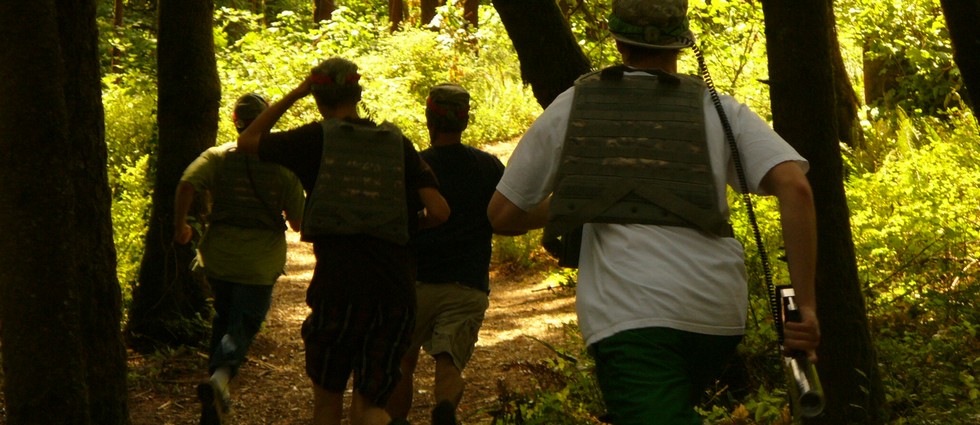









(Note: in many ways this week’s post is a continuation of last week’s discussion on using rovers in your laser tag strategy. If you haven’t read that, you’ll probably want to since they’re not explained here.) When the whistle blows at the start of a game your whole team is going to blast out of their base with the force of a herd of elephants. Winning teams, though, know WHERE they’re going from the base. Planning, though, is complicated by the fact that there’s very little time before the whistle blows and as the game goes on conditions change. So how do you create a plan at the start of the game that will help your team stay coordinated all the way through to the end?

Laser tag strategy doesn’t have to be complicated. Some quick planning will give your team an early edge.
A few simple guidelines make it easier to set your team’s plan quickly and allow the team to stay coordinated throughout the game, adapting to challenges created by the other team.
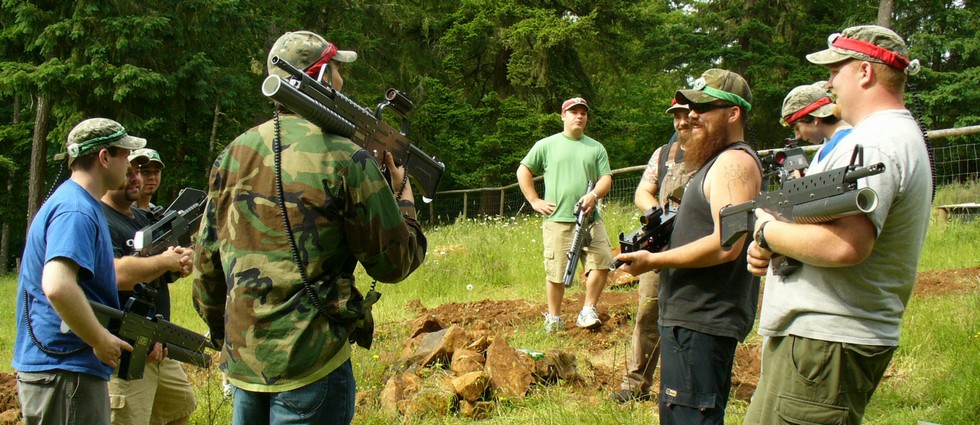
- To start with, since you don’t usually have time to decide on a large-scale laser tag strategy and direction by committee, you should decide for yourself where you want to go. Stand in the base in an area that shows what you plan to do. For instance, if you plan to go right, stand at the forward-right edge of where your base is (and the ref will let you be). If you’re going straight, stand in the middle of the front edge. If you’re going to be a rover then stand in the back instead of the front. (If you haven’t read our post on using rovers in play then you really should right now. They’re key to making sure that your team can adapt quickly to the other team’s attacks.)
- Look at your team and where people are standing. Are all of the directions covered? Are there too many people in any spot? Do you have enough rovers? Work quickly to fix any problems.
- If you want to change the role you’re playing midway through the game then wait until you’ve died and run to the new spot quickly. Check to see if anyone wants to swap. If not, no one can tell you not to move, but you will be leaving your team more exposed in the area you came from. Don’t forget that a rover may be willing to swap, too, and they’ll eventually come by if you wait.
There’s really only two tricks to making this method work. First, everyone needs to understand that they’re assigning their own position to start with and need to move into place within the base as soon as they decide, and second, that folks generally stay in their area so that you don’t develop weak areas. It’s a simple laser tag strategy, but any edge you can gain, especially early on in a game, will help your team come out on top.