



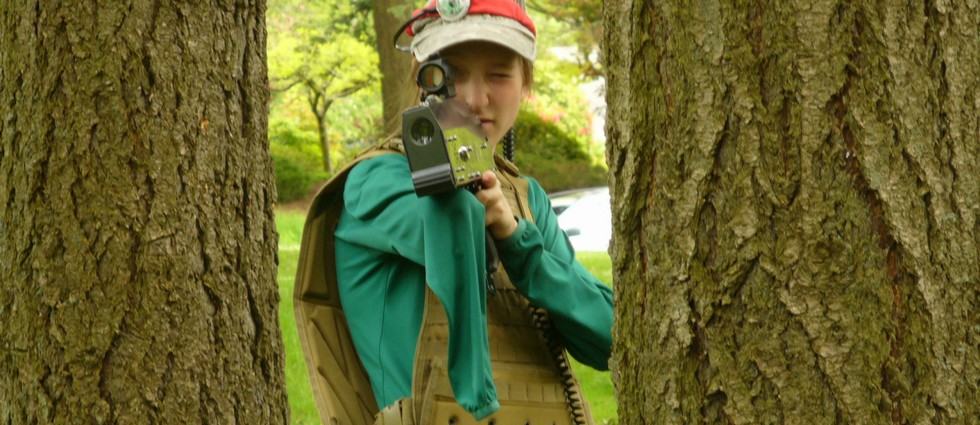
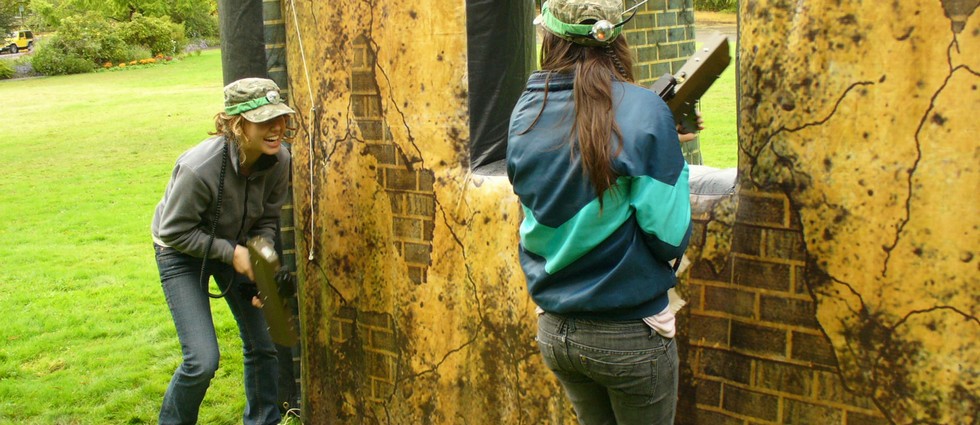
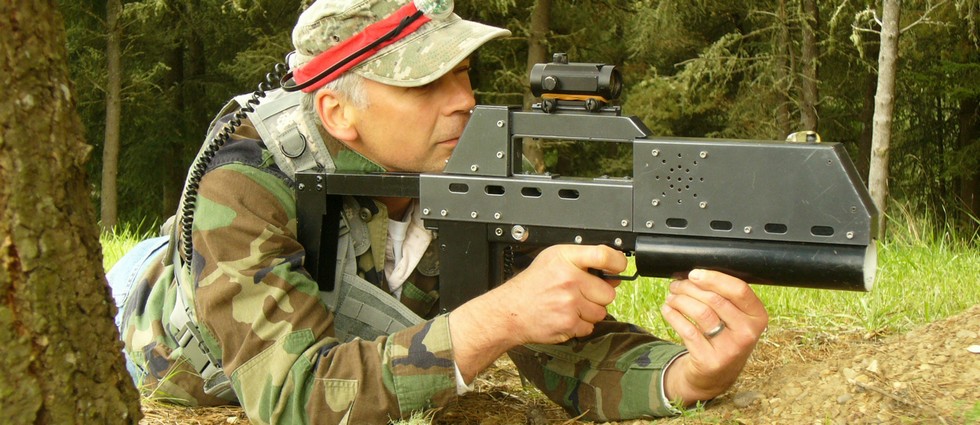
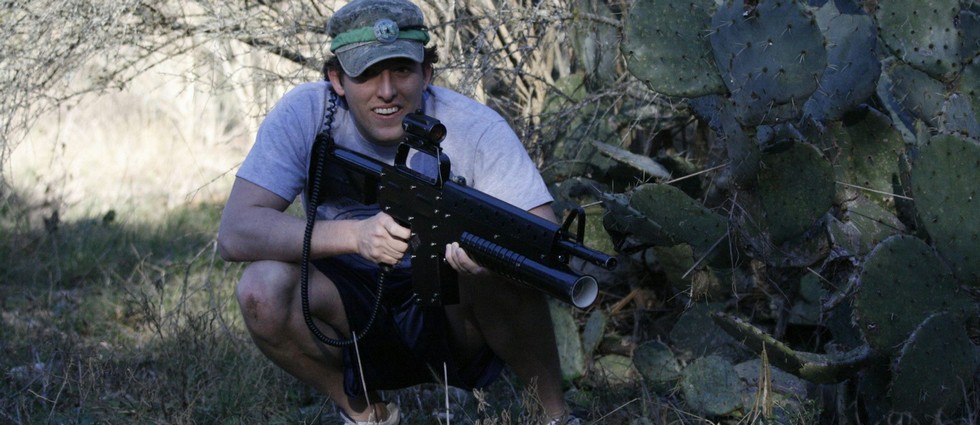
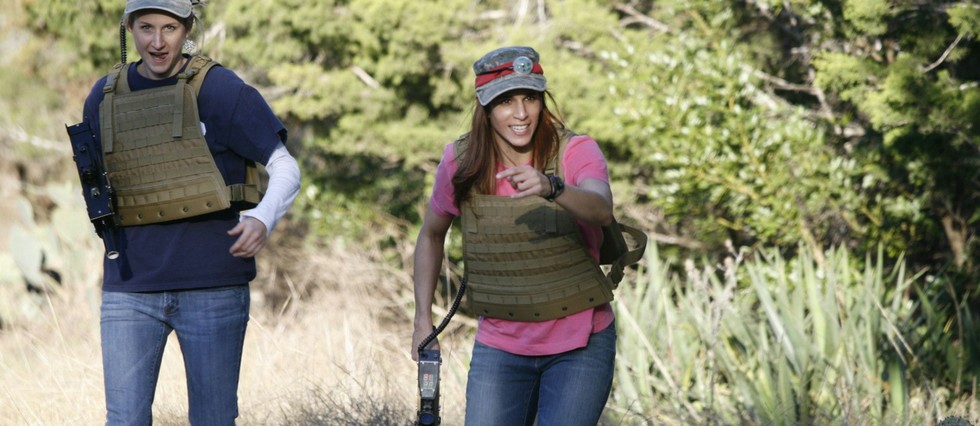
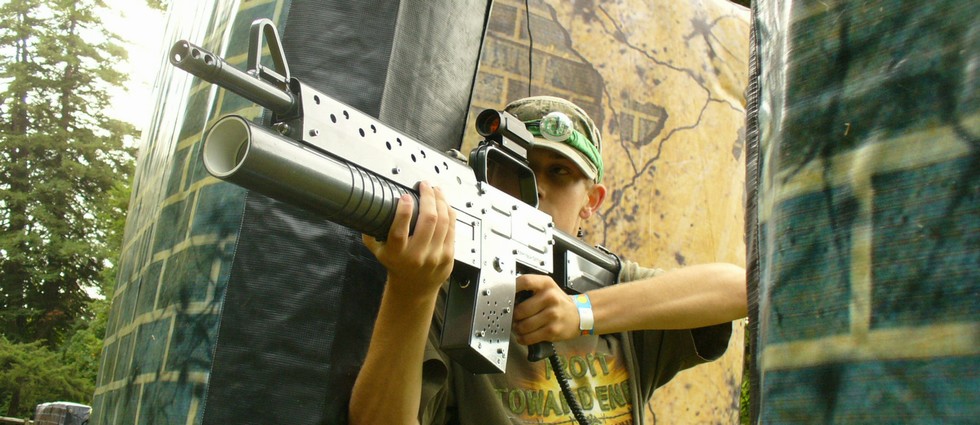
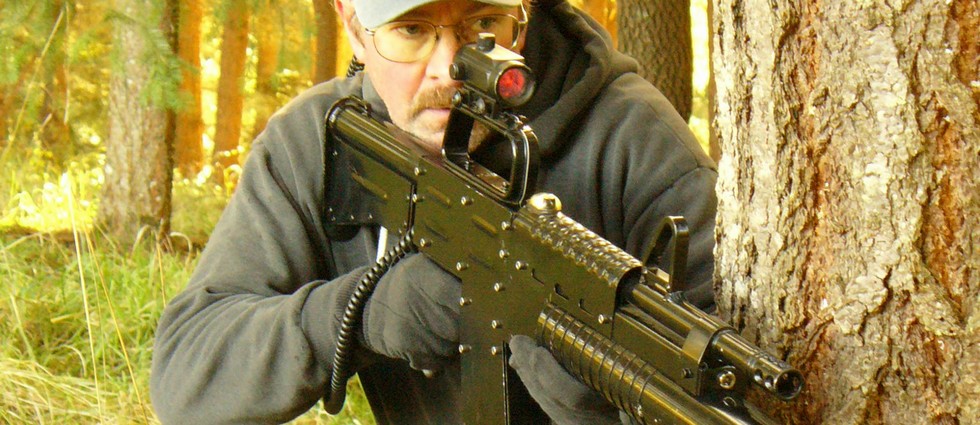
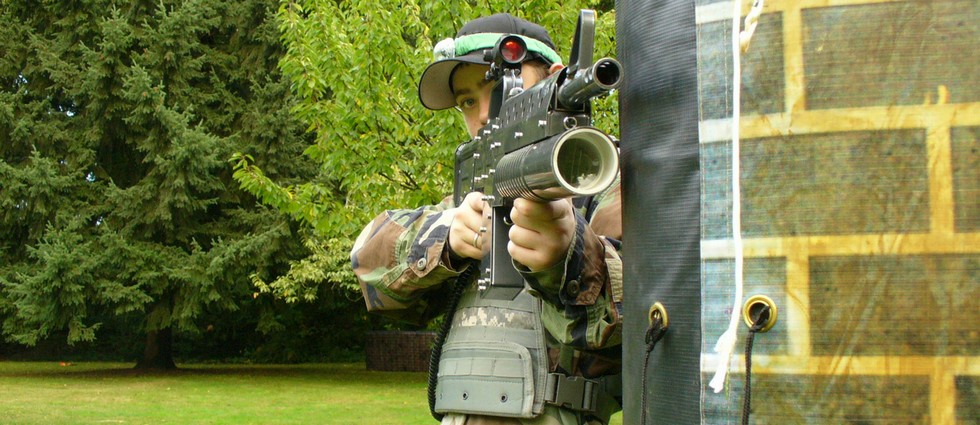
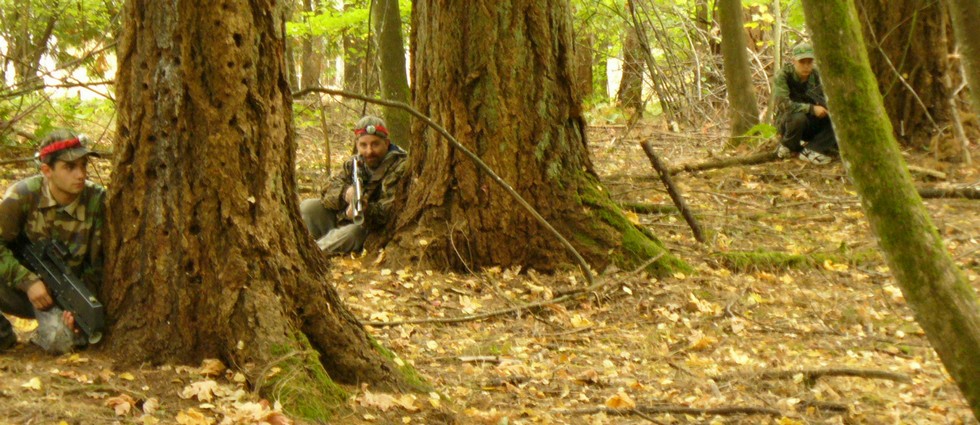
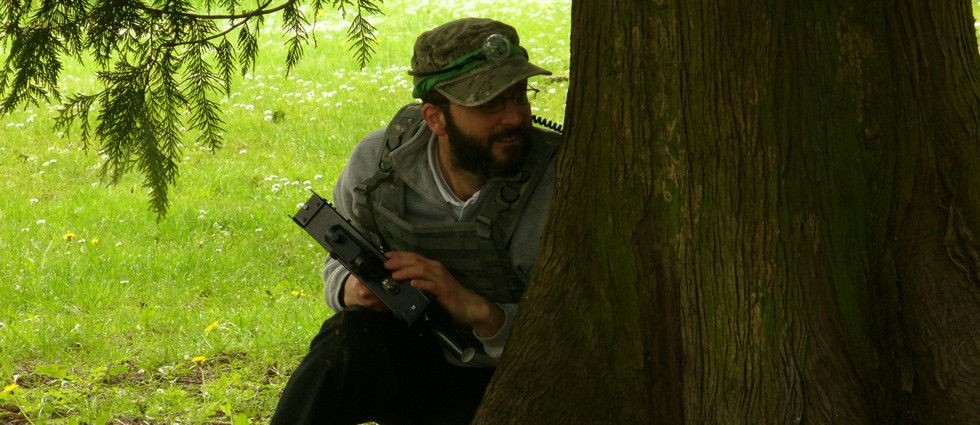
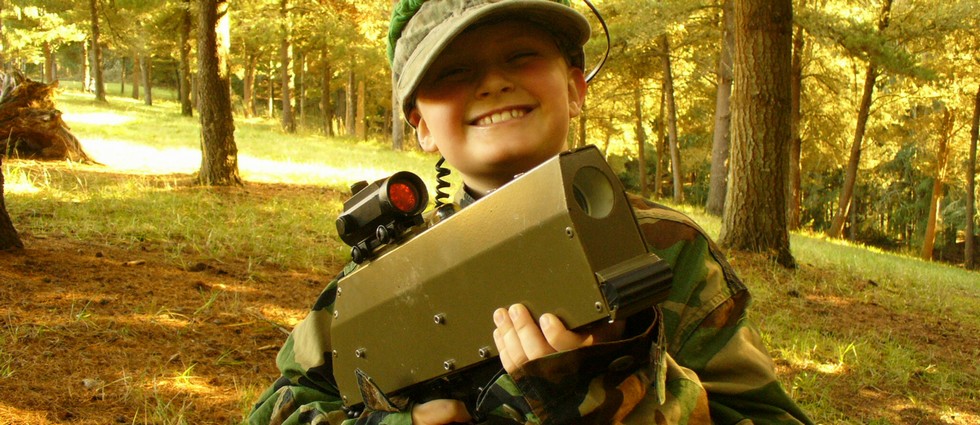
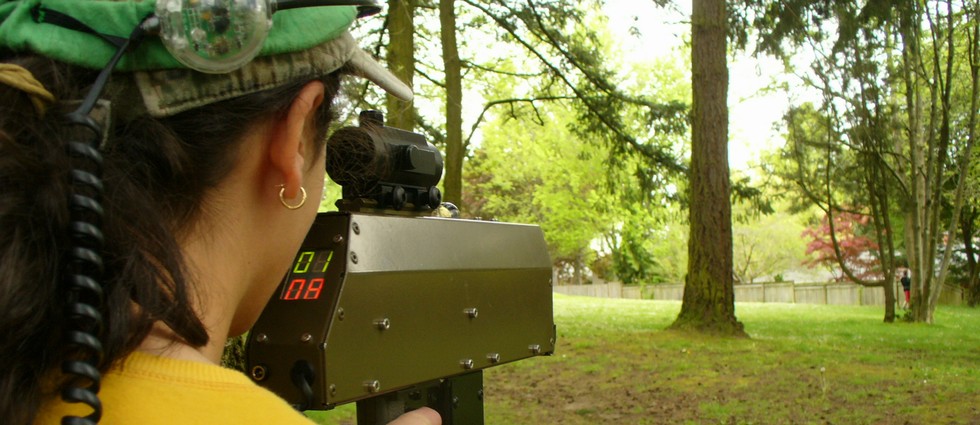
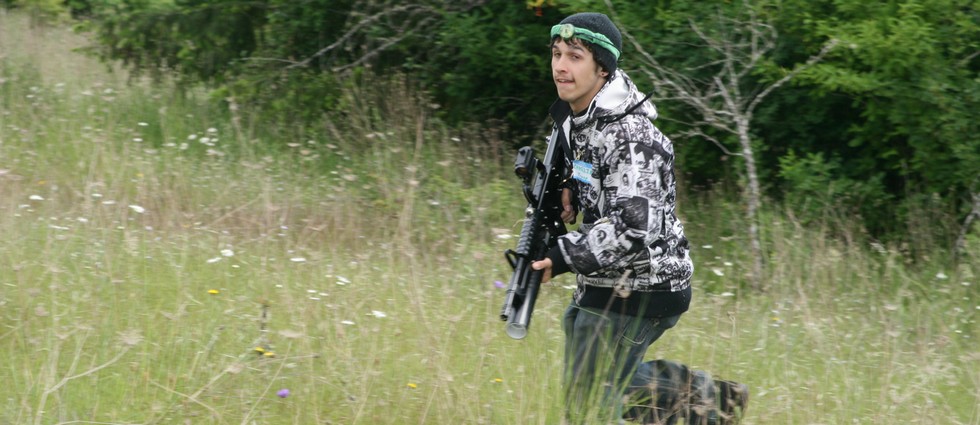

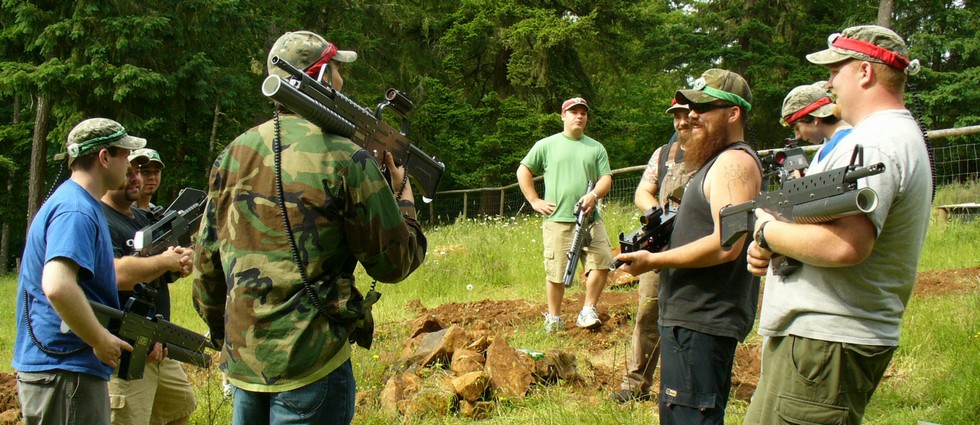
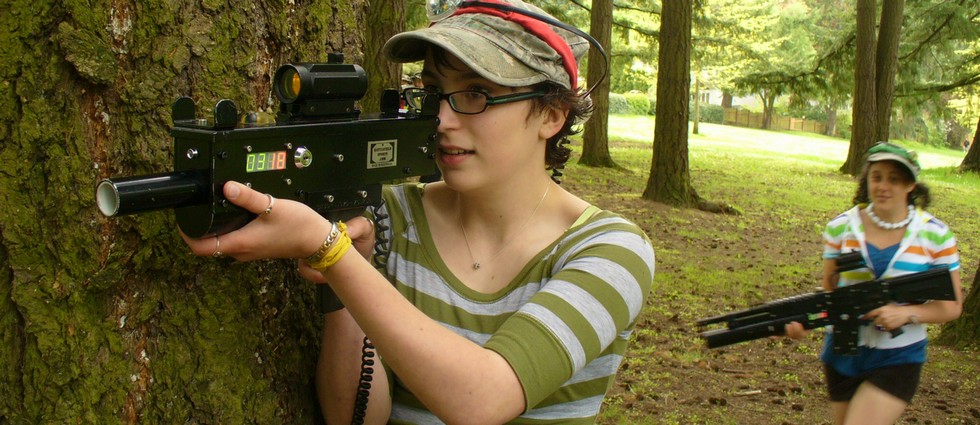
Last week we talked about how to prevent yourself from being heard by opponents. This week we’re looking at some of the fundamentals of how to prevent yourself from being seen in our series on laser tag stealth.

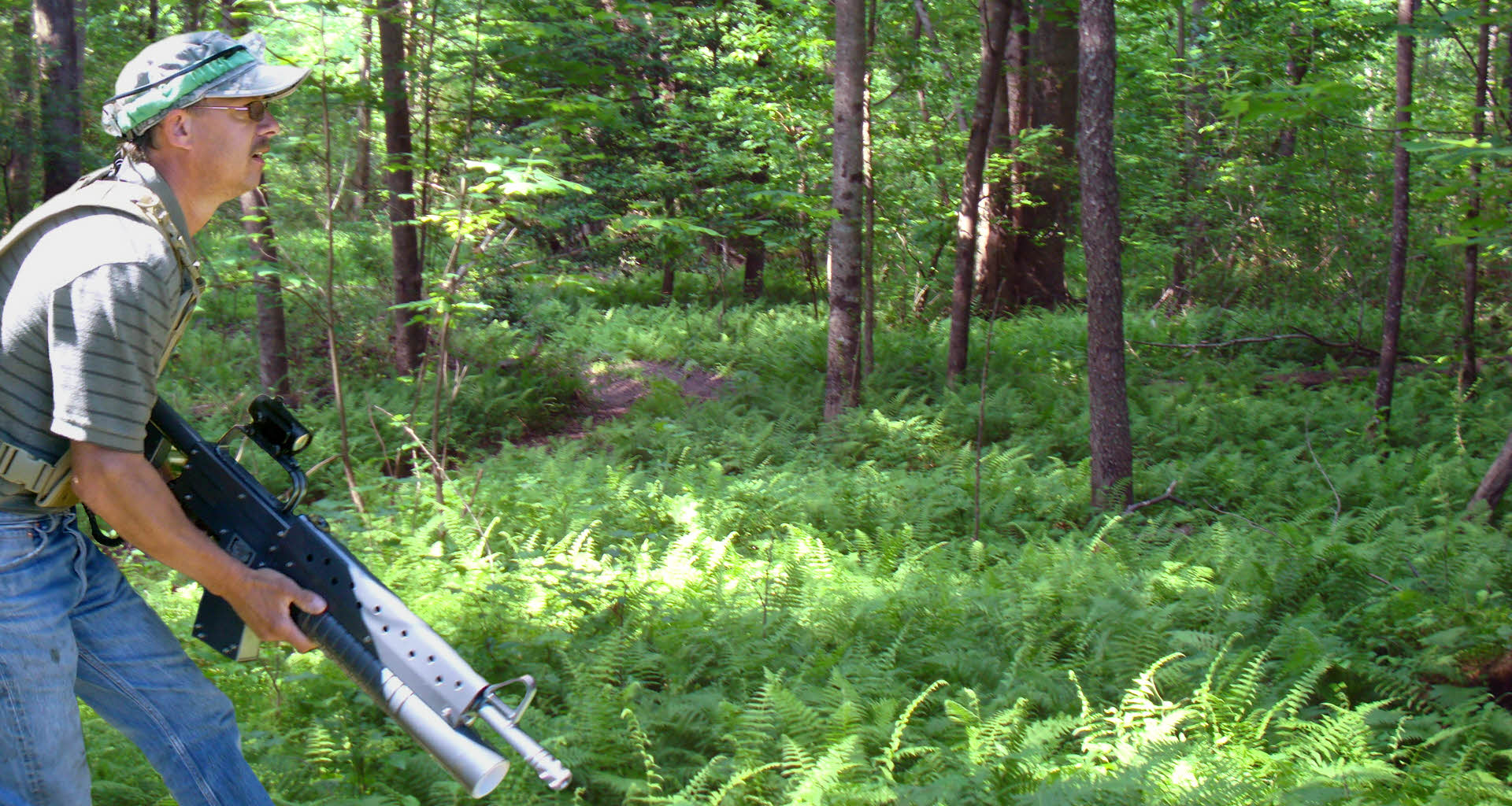
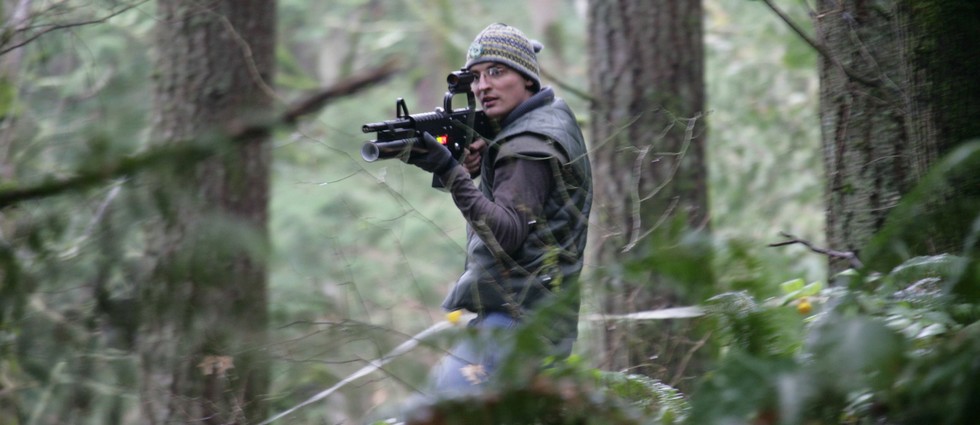
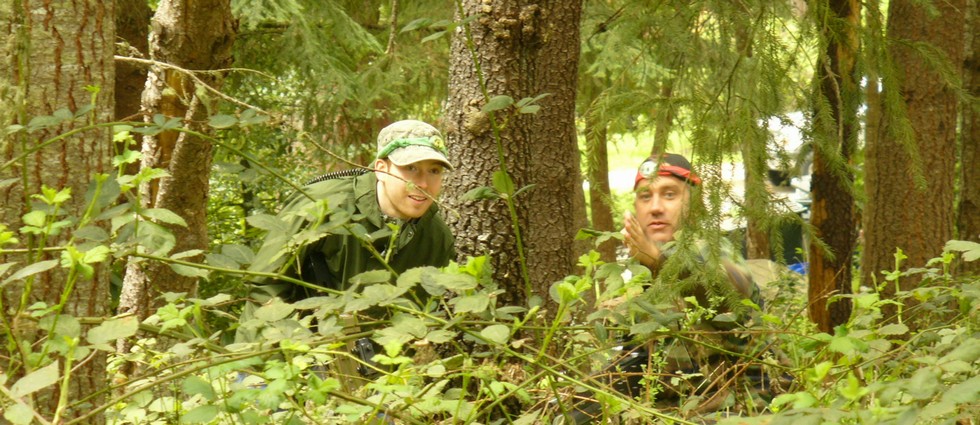
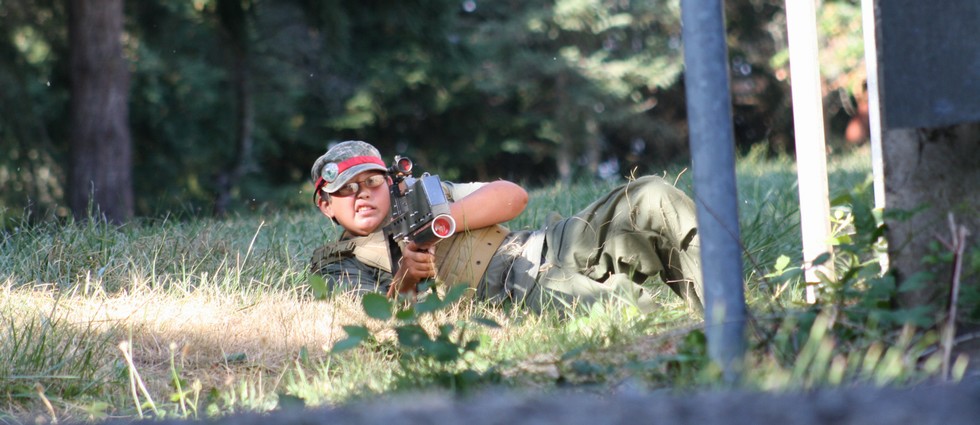
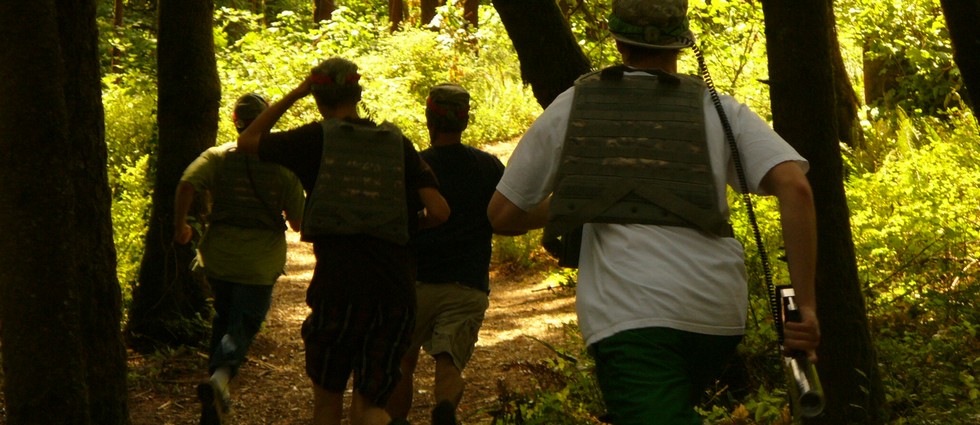
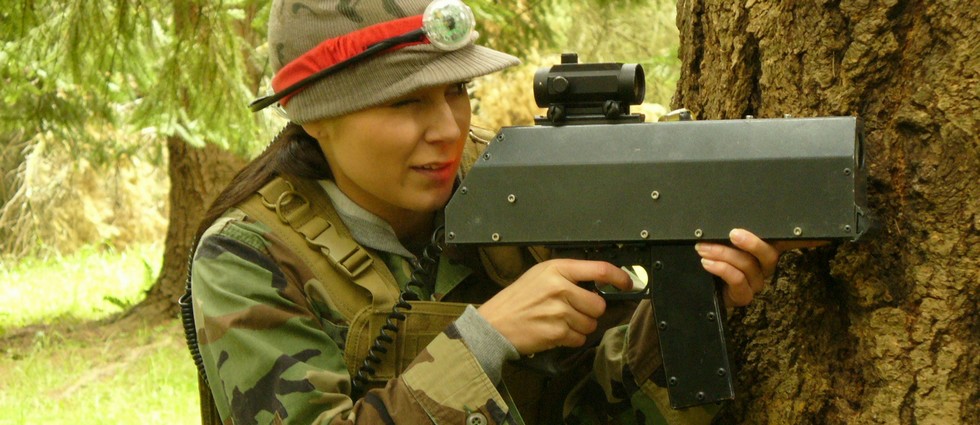
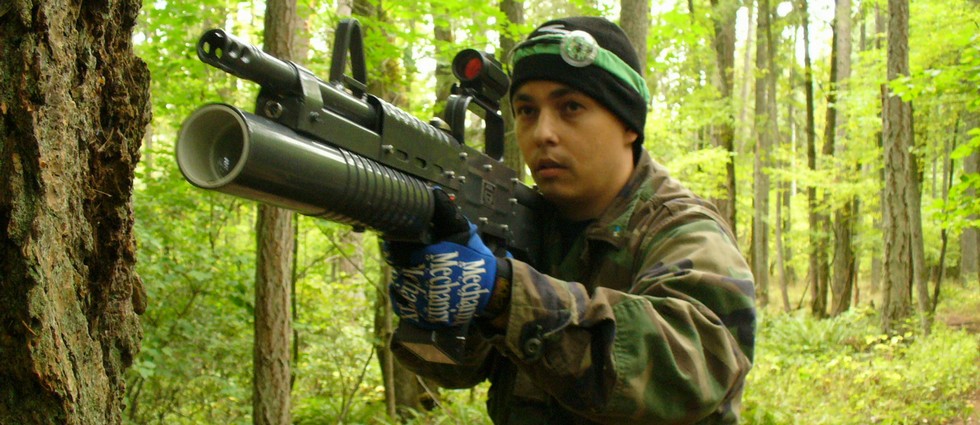
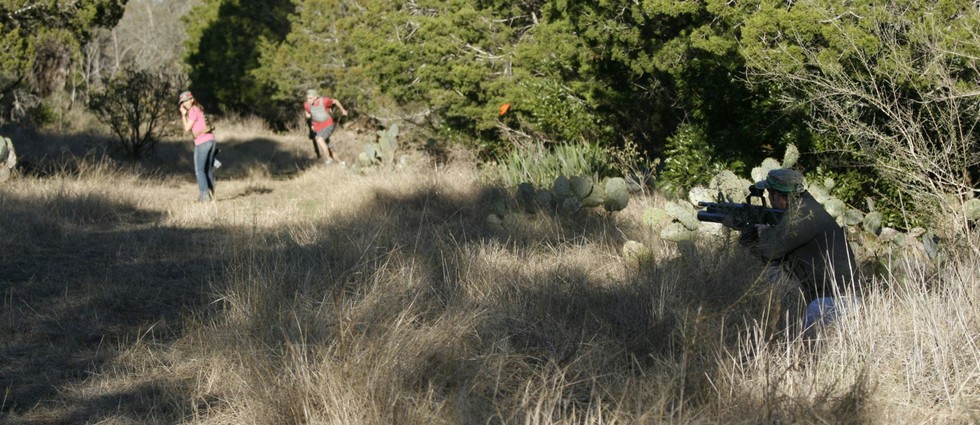
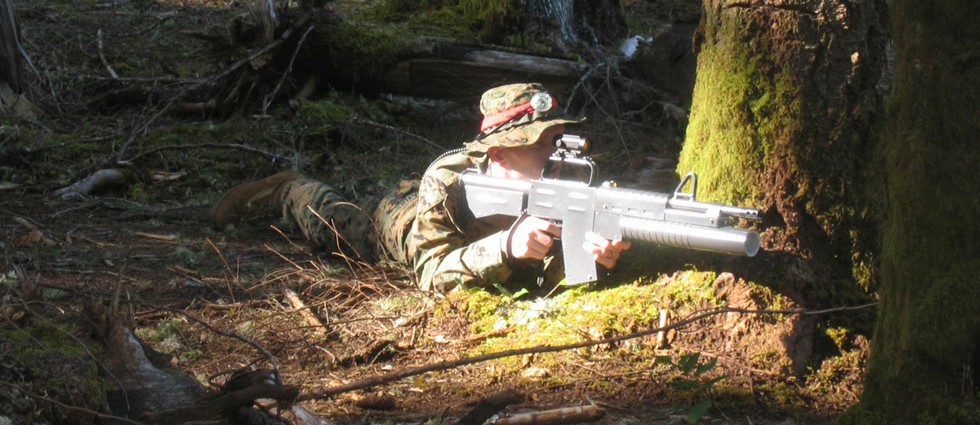
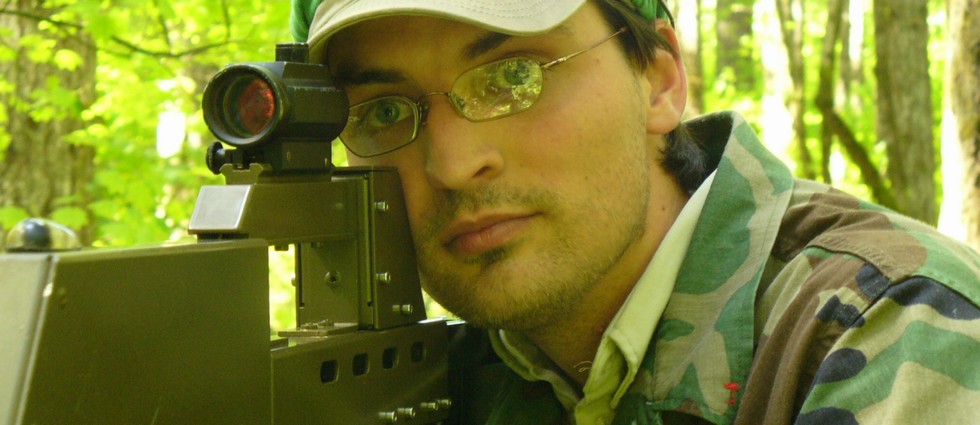
Stealth includes many factors, and wearing ghille like the picture above can actually hinder you if you don’t know how to utilize it properly.
Jump to another part of the series on stealth:
Sound – Silhouette – Concealment – Camouflage – Distraction
Let’s be honest here: you can’t be invisible on the field, so the problem with visibility on the field is not really how visible you are, but rather whether someone who wants to shoot you ends up spotting you. After all, you could wear flourescent clothing and still hypothetically never be seen. There are four main areas where you can impede your opponent’s ability to see you that we’ll be covering over the next few weeks:
- Silhouette
- Concealment
- Camoflage
- Distraction
The Fundamental Concern of Stealth: Your Silhouette
Your silhouette, or the shape of your body and equipment, is your #1 enemy when you’re trying not to be seen. In fact, it is the very thing that almost any stealth technique seeks to reduce and combat. Your eyes actually have nerves that are hard-wired to detect the human form, so obviously they’re the thing that your stealth needs to overcome to prevent them from firing when your opponents’ eyes pass over your position.
There are some basic things to pay attention to regardless of any other tools and techniques you use for stealth regarding your silhouette:
- Pay attention to what’s behind you – If the background is a lighter color than you (because of light or just because whatever you’re wearing is much darker) then your shape is easy to pick up.
- Pay attention to what’s in front of you – If your silhouette is protruding from the outline of the thing in front of you then you’re also easy to spot.
- Never go over the top of something if you can help it – Don’t go over a fence, don’t go over a hill anywhere near the top (stay at least 1/3rd of the way down from the peak), try to never come out of a ravine or canyon on the sides, where the sky silhouettes you perfectly for anyone below, etc.
- Movement is NOT your friend – The human eye is incredibly attracted to movement, so if you’re trying to hide, you’d better stay still. If you must move, move slowly.
- Be like a chameleon that can’t change color – Try to match the colors near you. You’re wearing a green shirt? Keep to bushes, grass, and leaves. Brown shirt? Dirt, tree trunks, and logs are your friend. (So are dead plants!). Dark blue shirt? Stick to shadows. Yellow shirt? Good luck. Look for moss and dry plants that are starting to wither. The point of all of this is, of course, that if you stay near colors in the environment that you’re wearing it’s harder to pick out your shape from the similar colors. The brain has to work just a bit more to find the edge of your image. (We’ll talk about picking your clothes to fit the terrain a bit more in the article on camoflage.)
Again, most of the techniques regarding visual stealth relate to finding ways to breaking up your silhouette. That said, even if you use multiple types of camoflage, hide behind things, and move silently you’ll still be spotted quickly if you don’t understand how those things are supposed to help break up your silhouette. Finding ways to break up the outline of your shape truly is the fundamental principle of all visual stealth.